
What is an End Point Assessment?
The end point assessment (EPA) is the last assessment that an apprentice has to undertake at the end of the training to show that he/she is competent in his/her occupation. EPA makes sure that the apprentices are not only knowledgeable about their position but also able to work according to the requirements of the industry before getting full qualification.
An EPA is administered by an external organisation (which is also known as the End-Point Assessment organisation (EPAO)) to ensure fairness and credibility. This independence is valuable as it will avoid favouritism, hence all apprentices in the country are evaluated in the same manner.
With the ongoing growth of apprenticeships in the various sectors, EPAs will be critical in enhancing quality and accountability. As part of the journey, many individuals undertake assessor qualifications so they can support learners toward EPA readiness.


Purpose of End Point Assessment in Apprenticeship
The main objective of end point assessment in apprenticeship is to confirm that the apprentices have attained the knowledge, skills and behaviour that are described in their apprenticeship standard. This will make them well equipped to take up actual professional duties. EPA is intended to highlight practical and job-based activities that the apprentices would undertake in their day-to-day activities and the qualification is not only academic but also occupationally relevant.
Also, the EPAs are used as a reference point by employers, trainers and regulators. They assist in ensuring that all the fully qualified apprentices are competent equally, irrespective of their training locations. This standardisation enhances industry trust and helps in long term workforce development. In order to maintain high standard assessment process, most organisations have been relying on Internal Quality Assurance professionals in order to make sure that the assessments are fair, valid, and consistent.
Types and Components of End Point Assessment
End-point assessment includes a diverse set of approaches that aim to evaluate knowledge, skills and behaviours of an apprentice in a fair and comprehensive manner. These techniques are selected in accordance with the job and duties of the occupation. Since EPA occurs when all the training has been finished, it should correctly show whether the apprentice is capable of doing the job as per the national standards.
Different apprenticeship standards combine these methods to create a balanced and occupation specifc assessment strategy. The most prevalent types and elements of end-point assessment are as below and each of them has a different purpose in determining competence.
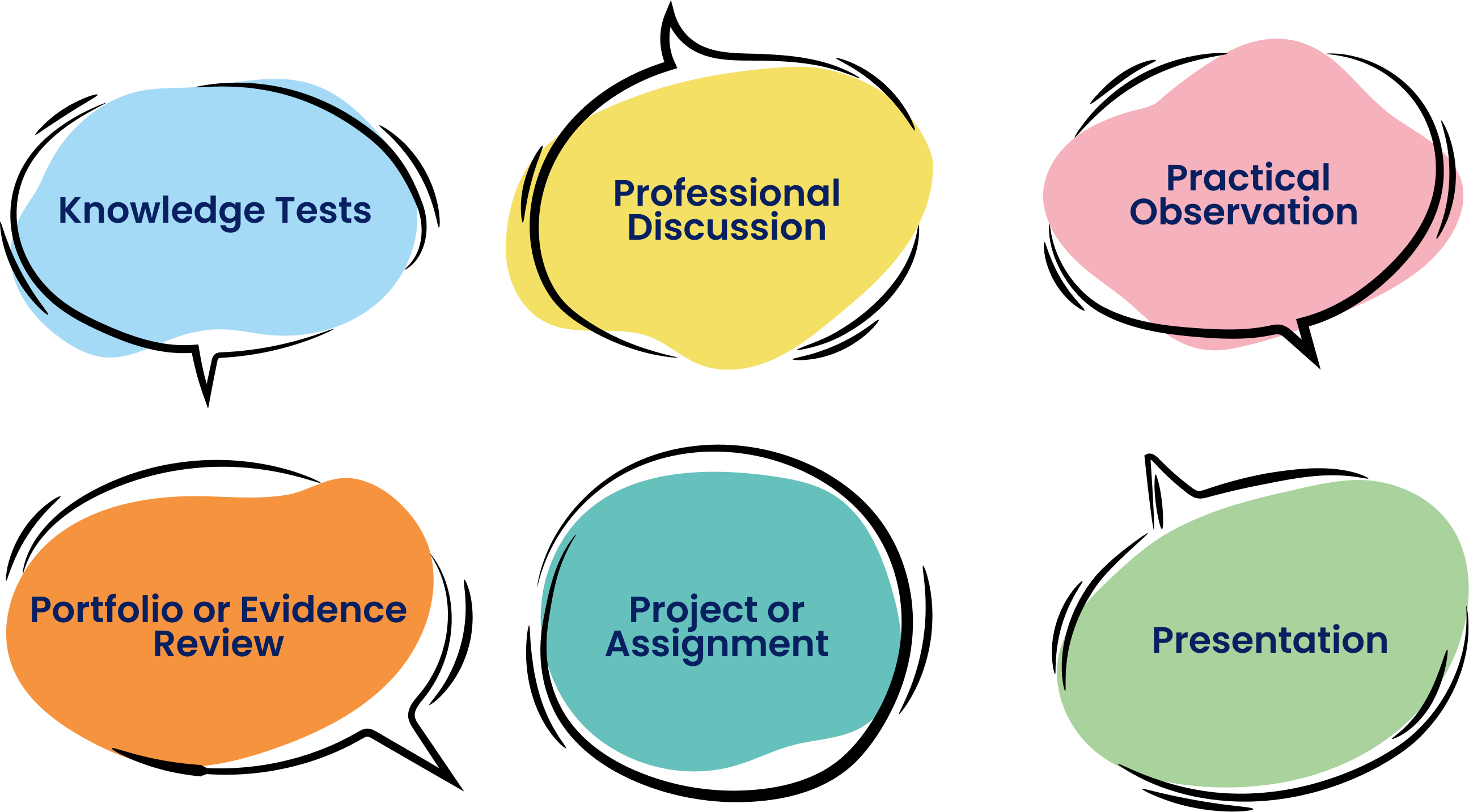
Knowledge Tests
Knowledge tests determine the apprentice’s theoretical knowledge of their job position. These may be multiple choice exams, written tests or online tests. They make sure that the apprentice is able to implement the necessary concepts, rules, and practises in the industry before proceeding into more practical aspects.
Professional Discussion
A professional discussion is a formal dialogue between the apprentice and an assessor, which is based upon actual experiences, judgement, and reflective knowledge. This evaluation enables the apprentices to show deeper insight into what they have done and the reason behind the method they have used in different situations.
Practical Observation
Practical observation demonstrates the actual level of an apprentice’s performance in real work situations. During this time, the assessor observes the apprentice working on various tasks that are related to the job and at the same time makes sure the assessment is done under the real working conditions. This part of the assessment is very important for those jobs where manual skills are used extensively.
Portfolio or Evidence Review
Some EPAs involve a review of a portfolio, in which apprentices show evidence that they have collected during training. This can be written reports, supervisor feedback, finished projects or reflective logs. The portfolio assists in establishing the consistency and competence of the apprentice in the various tasks with time.
Project or Assignment
Some apprenticeship criteria mandate project assessment, in which the apprentices must complete a piece of work, such as a business proposal, improvement plan, or analysis report. This element emphasises problem-solving, planning and analytical capabilities.
Presentation
Presentation enables the apprentices to show their ability to communicate and their comprehension of a certain project or subject. It also provides the assessors with information on how well apprentices can articulate their knowledge and the interaction of the apprentices with a professional audience.
Smart End Point Assessment Explained
The term smart end point assessment refers to the use of digital tools, simplified procedures, and improved support to streamline EPAs. The idea behind this is to eliminate delays, to automate the administration and give the apprentices better directions and quicker feedback. Digital observation tools, remote professional discussions, real time feedback systems and online testing are commonly incorporated in Smart EPAs.
The use of technology in a smart EPA gives comfort to apprentices and assessors at the same time. It allows flexible scheduling, provides an assessment recording that is both secure and reliable, and quickens the whole grading and certification process.

Ensuring Quality and Consistency in EPA
Good EPAs must have a good internal and external quality assurance system. Internal Quality Assurance plays an important role in making sure that all the assessments are in accordance with national standards, the decisions made by assessors are uniform and that the apprentices are rated fairly. Quality assurance eliminates mistakes, ensures compliance and instils trust in the system of apprenticeship.
Quality and consistency are also maintained with the help of the frequent monitoring of EPAOs, regular standardisation meetings, assessment assessor training, and evaluation of assessment materials. Effective communication between employers, training providers and assessors is necessary to make the apprentices know what to expect and prepare accordingly. This collaborative approach preserves the integrity of end-point assessment in industries. The following are some of the points that lead to consistent and reliable EPAs:

Importance of EPA in Apprenticeship Success
End-point assessment is not only a regulatory need but it is an important part of ensuring apprentices enter the workforce with confidence and competence. An effective EPA experience is a confirmation that students have acquired the required skills to move in their careers and become productive members of their respective industries. It enhances the integrity of the apprenticeship system and the employers become confident that new employees meet professional standards.
Moreover, EPAs instil a culture of accountability, growth and high performance. Apprentices who successfully finish EPA exhibit resilience, discipline, and expertise which are highly appreciated by employers. End point assessment organisations offer guidance, and the learners are able to go through the process of the apprenticeship with ease and attain their objectives with confidence.
Take the next step
Courses related to this guide
- Level 3 Certificate in Assessing Vocational Achievement (CAVA)The full assessor qualification for assessing in the workplace and in training settings.
- Level 4 Award in Internal Quality Assurance (IQA)For experienced assessors moving into internal quality assurance.
Ofqual-regulated qualifications, studied online. Browse all courses or talk to an advisor.