
What is the Teaching and Learning Cycle?
The teaching and learning cycle is a systematic approach that assists teachers in providing effective teaching and encourages constant development in learners. It involves a sequence of interdependent processes such as planning, teaching, evaluating, and discussing learning outcomes, and is aimed at providing learners with an effective and holistic learning experience.
It is important that new and experienced educators understand what the teaching and learning cycle is. This cycle allows teachers to identify the gaps in the learning process systematically, change their practises, and help learners reach their potential.

Why the Teaching Cycle Matters in Education
The teaching cycle is not just a procedural guide, but rather a pedagogic resource which guarantees that learning is meaningful, organised and quantifiable. A managed teaching structure allows teachers to adapt teaching to the different learning styles, ensure a high level of engagement, and also results in an improved level of learning.
In addition, the teaching and learning cycle helps in promoting accountability and transparency in education. The learning objectives, teaching methods, and the results of assessments can be recorded by the teachers, which will give them a clear path for both the learners and the institutions.
Key Stages of the Teaching Cycle
The teaching and learning cycle comprises a number of key steps, each of which leads to effective learning. These stages work in a constant loop, which encourages evaluation and continuous improvement in teaching practises. The key elements are broken down below:
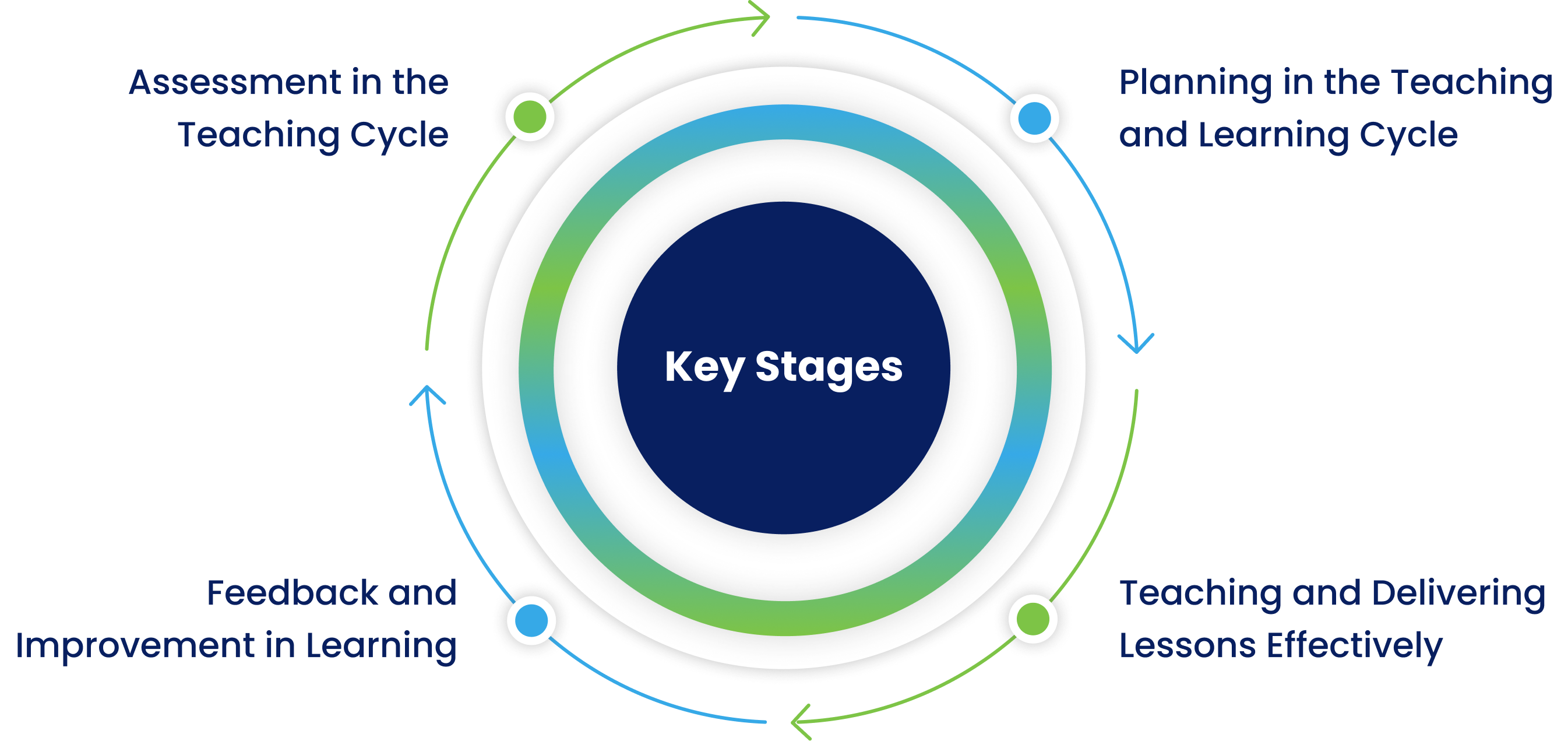
Planning in the Teaching and Learning Cycle
The teaching cycle is based on planning. At this phase, teachers determine the learning goals, evaluate the background knowledge, and reflect on the requirements of the learners. Lesson plans are created to meet the standards of the curriculum and embrace the use of the relevant teaching materials. Another aspect of proper planning is the choice of assessment strategies that will give a clue about progress and understanding of the learners.
In order to plan, teachers can rely on diagnostic tools, preliminary assessments, and profiles of learners. This is an active strategy that minimises learning discontinuities and promotes specific interventions.
Teaching and Delivering Lessons Effectively
Once planning is complete, the teaching cycle moves into delivery. This phase entails the implementation of lesson plans using diverse methods of teaching that include lectures, group assignments, practical projects, and online education. It is aimed at making the learners active and retaining knowledge.
Educators should be able to observe the level of engagement among learners, modify the approach instantly, and assess their understanding using formative assessment. Teaching involves more than just knowledge of the subject. It includes being a good communicator with proper classroom management and a motivator of the learners.
Assessment in the Teaching Cycle
Assessment is a very important part of the teaching cycle as it involves providing feedback on the progress of the learners and the effectiveness of teaching methods. Assessment may be formative, for continuing learning, or summative, in order to determine overall achievement. The important points in assessment include:
- Determining the weaknesses in the learning process
- The level of learning objective mastery
- Giving practical feedback to the learners
- Instructing future lesson planning and instruction techniques
These assessments enable the teachers to make necessary changes in their teaching and they are able to make sure that every learner meets their potential.
Feedback and Improvement in Learning
Feedback is part of the teaching and learning cycle that helps learners to know their strengths and weaknesses. Constructive feedback gives motivation to the learners, enhances reflection and self-directed learning.
Assessment feedback also helps teachers to review and correct their teaching techniques. The continuous improvement will ensure that the teaching practise is adapted to address the evolving needs of the learners and provide an environment of active and responsive learning.
What Does Teaching Do for Learners?
Instruction is the keystone of education. It gives the learners the knowledge, practical skills and critical thinking skills that are very vital in personal and professional development. Through a structured teaching cycle, teachers are able to make learning consistent, measurable, and meaningful.
Further, instruction helps learners have confidence, problem-solving skills, and independence. It builds curiosity and promotes life long learning. The teaching cycle allows the learners to reach their academic and personal objectives through a combination of specific training and continued support. To those interested in advancing their own career as an educator, Education and Training Qualifications can provide essential skills for effective teaching.

Benefits of an Effective Teaching Cycle
A structured teaching cycle has a number of advantages to both teachers and learners:
01
Clear objectives and consistent assessment improve knowledge retention
02
Active learning strategies may keep learners motivated
03
Instructors can customise lessons to individual learner requirements
04
Teachers have the opportunity to analyse and improve their practise
05
Offers a clear framework for tracking the progress
A good teaching cycle will provide continuous delivery, testing and improvement of learning, and therefore lead to better education.
Improving Outcomes Through the Teaching Cycle
The teaching and learning cycle is an effective framework to enhance educational performance. With careful planning, instruction, evaluation and correction of the instructional practises, teachers can offer high quality learning opportunities to learners based on their needs. Making sure that the teaching methods are reviewed and altered regularly, one can make sure that the learners get the relevant, effective and interesting instructions.
Integrating the teaching cycle into regular practise promotes reflective teaching and informed decision making. Educators are able to recognise what works, copy the strategies that are working and deal with the challenges in a timely manner. To know about training and professional growth opportunities in structured teaching and learning, contact us today to better understand and be able to apply them.
Take the next step
Courses related to this guide
- Level 3 Award in Education and Training (AET)The introductory qualification for teaching or training adults, studied online.
- Level 5 Diploma in Teaching (Further Education and Skills)The full teaching qualification for further education and skills, studied online.
Ofqual-regulated qualifications, studied online. Browse all courses or talk to an advisor.