

What is an Assessment Plan?
An assessment plan is a systematic scheme in which learning will be measured during a course, programme or training period. It also makes certain that the methods of assessment are consistent with learning outcomes so that educators can readily determine what learners know, comprehend, and the capacity to apply it. An effective plan will eliminate guesses and give a methodical way of monitoring the progress as time goes by.
Evaluation strategies play a crucial role in ensuring clarity, consistency and fairness. They assist learners in realising how they are going to be assessed and educators get confidence that their approaches are an examination of actual performance. Whether in schools, vocational training or workplace learning, effective assessment promote quality of teaching and minimise achievement gaps.

The Link Between Assessment and Planning
Both assessment and planning are closely interrelated. The first step to good planning is to have clearly defined outcomes and the method of assessment is used to determine whether the outcomes have been achieved. With assessment data being used in planning, the educators will be able to adjust lessons in order to meet the needs of the learners and constantly improve the teaching methods.
This association also makes teaching meaningful instead of responsive. Through Assessment as a part of the planning cycle, teachers create learning experiences that lead to the achievement of quantifiable outcomes. This results in more organised, focused learning and a higher level of confidence in the learner during the learning process.
Key Elements of an Effective Assessment Plan
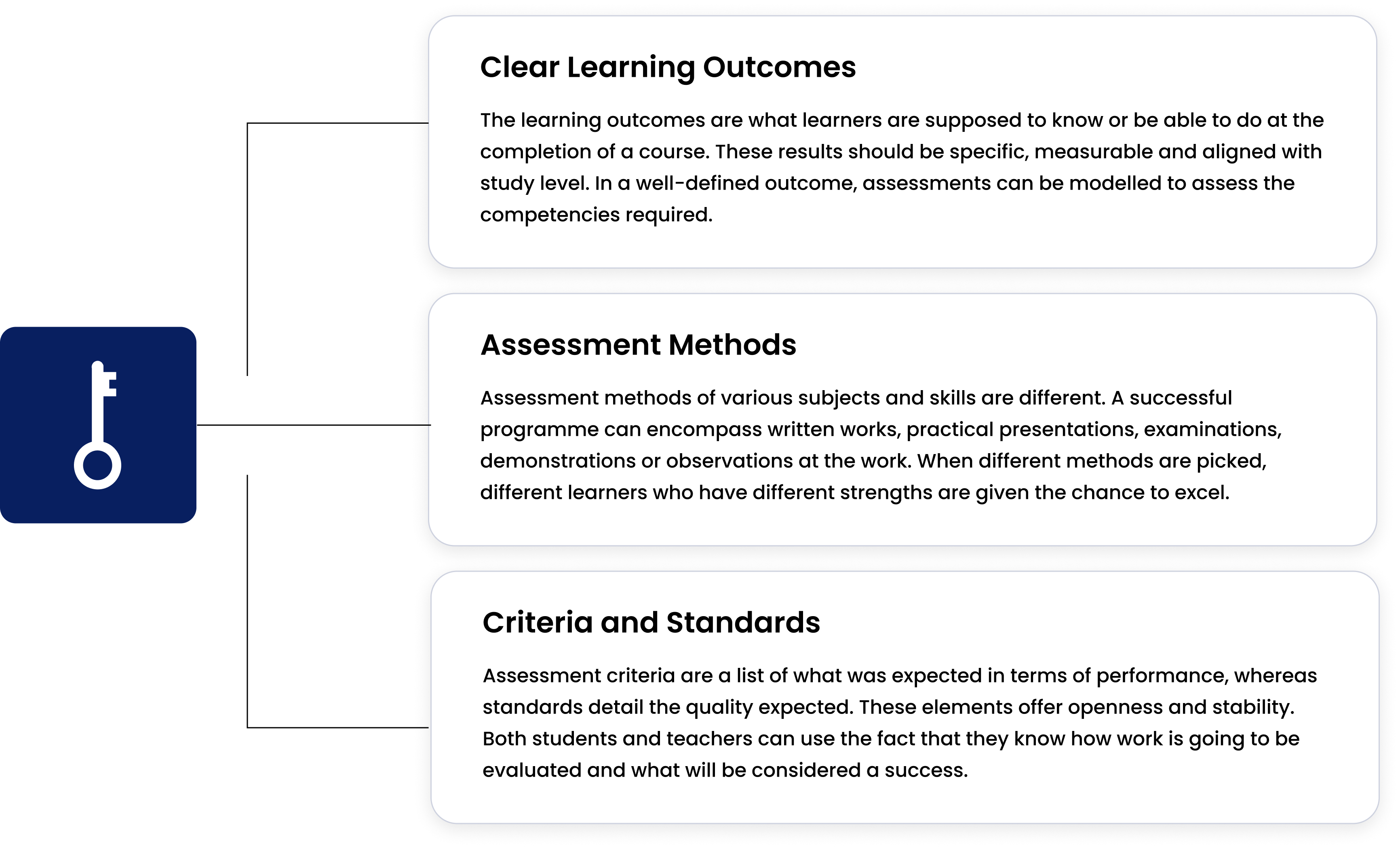
A good assessment plan contains various components that are important and collaborate to build a valuable and realistic system of assessment of learning.
How to Develop a Plan for Assessment
The process of assessment planning is a step by step plan involving the integration of curriculum goals, learner needs, and assessment tools.

Determining Assessment’s Purpose
The first step is to determine the type of assessment to be used i.e., diagnostic, formative assessment or summative assessment. Knowing its purpose means choosing the right methods.
Aligning Assessment with Objectives
Make sure that all the assessments have justified the targeted learning outcomes. Disagreement may cause confusion, wrong grading, and poor teaching.
Selecting Evaluation Tools
Online quizzes, portfolios, practical tests or interviews can be employed depending on the subject and level of skills. Select the techniques that facilitate justice and precision.
Deciding Assessment Timing
An effective evaluation plan establishes definite time frames. These could be checkpoints throughout the course and large summative tests at the end.
Identify Feedback Strategies
Significant feedback assists learners in improving. Establish a system where the feedback after each assessment is timely, constructive and clear.
Using Assessment Plans to Improve Learning Outcomes
Assessment plans are not merely those administrative documents, but also proactively influence the quality of learning. Considerably, they allow teachers to track the progress, recognise gaps, and provide individual assistance. This will make the learners remain on track and build confidence in their capabilities.
These schemes also help in the long term betterment as they aid in curriculum review and instructional modifications. Teachers are able to reach the performance patterns, improve instructional resources and implement measures to enhance knowledge among the learners.