
What is an Initial Assessment?
An initial assessment is the first step in a course or training programme to determine the current knowledge, skills and learning needs of the learner. It assists educators and trainers to collect vital information regarding the learner, which can be used to provide instruction and assistance. Basically, it sets the foundation for a customised and efficient learning process.
Initial assessments are extensively applied in education and vocational training to make sure that the learner is enrolled in the best course level. They are also important in the detection of possible obstacles to learning in order to implement early interventions. If you are seeking an assessor position or you are just trying to work on your assessment skills, understanding what is an initial assessment, is an important element of successful teaching and working with learners.

Importance of Initial Assessment in Education
Pre-assessment is an important factor in establishing an inclusive learning atmosphere. The information about the initial level of learners will help teachers to create lesson plans, which can be hard yet attainable. This keeps the learners active and enthusiastic in their course.
Further, initial assessments facilitate adherence to learning requirements, standards and quality assurance models. Initial assessment practises enrich the entire learning process, offer a perspective on the progression of learners, and increase the retention rates. They also assist the teachers in recognising students who might need extra assistance or materials at an early age.

What is Assessed during an Initial Assessment?
In an initial evaluation, some background information and the learning profile of the learner are considered. Such understandings assist teachers in developing a personalised strategy.

Past Knowledge & Skills
Assessment of the past knowledge and skills helps the instructors to determine what the students already know and what they can do. This can include academic qualifications, experience, practical or previous course achievements. As an illustration, a student taking a teaching assistant course might be assessed in terms of basic literacy, numeracy or classroom management skills. This will ensure that unnecessary repetition does not occur and the learners is also challenged.
Learning Styles
It is essential to know the learning style of a learner in order to come up with effective lessons. There are 4 primary learner types. The learners can be visual, auditory, reading/writing, or even kinaesthetic and determining it can assist the educators to choose the best teaching methods. As an example, diagrams and videos would be beneficial to a visual learner but a practical activity would be beneficial to a kinaesthetic learner.

Motivation and Goals
The reasons why learners are pursuing a course and what they expect to accomplish will give insight into the level of engagement and commitment of the learners. Motivated learners who have set objectives are more active in their learning and they also progress at a higher pace. During a preliminary evaluation, the teachers may discuss career aspirations, personal growth targets or a specific expertise that the learners wish to acquire.

Learning and Support Requirements
Determining any other support needs is also a major aspect of the process. This may be language support of non-native speakers, assistive technology of students with disabilities or customised resources to students who require more support. Teachers can address these needs early to ensure that all learners get an equal opportunity to succeed.

Attitudes and Confidence Level
The attitude of a learner to the learning process and the level of self confidence can have a significant influence on the success of a learner. The initial evaluation is about how comfortable learners feel with the subject matter, their readiness to participate in their group work, and their independence. By being aware of these factors, the educators are able to offer encouragement, instil confidence and come up with strategies of overcoming any form of apprehension.
With the comprehensive analysis of these spheres, the initial assessment helps to have a clear idea of the profile of each learner. This holistic knowledge can help teachers design learning journeys that are individual, focused, and have higher chances of delivering positive results.
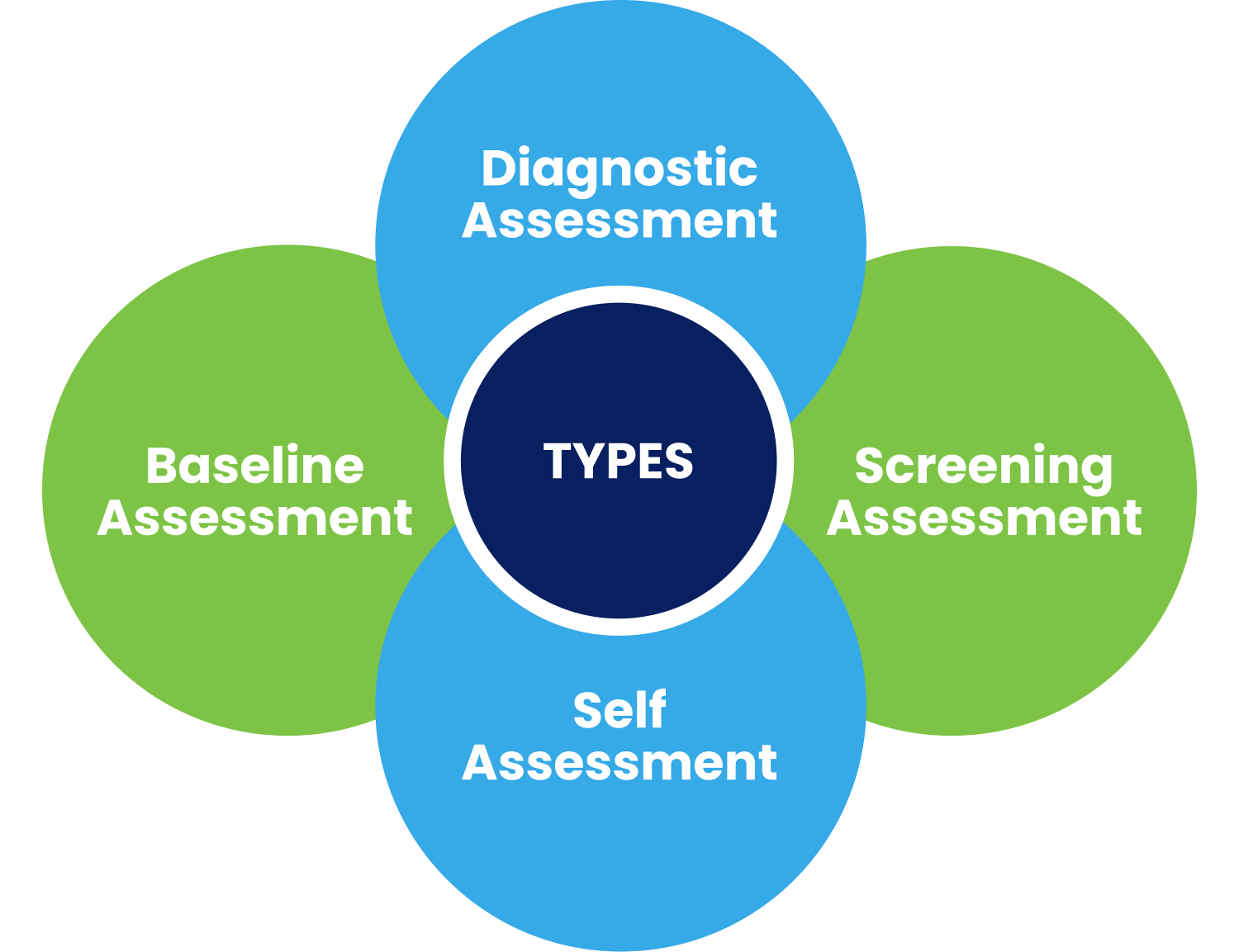
Types of Initial Assessment
Initial assessment in education is of various kinds, and each of them is aimed at assessing the learners in a different manner. The kind of knowledge assists teachers in choosing the best approach to use in their environment.
Diagnostic Assessment
This is the identification of the particular gaps in knowledge or skills prior to the learning process.
Baseline Assessment
This is a measure of the abilities of the learners at the beginning of a course to determine the results later.
Self Assessment
Encourages learners to reflect on their competency, experiences and confidence
Screening Assessment
This is commonly employed as a way of identifying possible learning challenges or other support needs.
All these techniques guarantee that teachers are able to know the learner in a holistic way so that they can teach them with greater individuality and success.
How Initial Assessments are Conducted
It is possible to conduct initial assessments through a combination of practical, written and observational methods. For instance, teachers can apply questionnaires, interviews, skills tests or interactive activities to evaluate the skills of learners.
Assessors are also trained to view, perceive, and document the assessment results in a proper manner that will make the findings reliable and implementable.
Benefits of Effective Initial Assessment
A good initial assessment is beneficial for both the learners and the teacher. Key benefits include:
- Assists in customising course material as per the individual requirements.
- Allows additional resources or interventions to be provided promptly.
- Learners feel recognised and acknowledged, which makes them more motivated.
- Gives a reference point on how the learner would be monitored as they improve.
- Supports higher achievement rates and learner satisfaction.
Through these advantages, schools can enhance the quality of teaching and learning programmes in the educational institutions to a larger extent.
Enhancing Learning Through Initial Assessment
Initial assessment is not merely a starting point but has an impact on the whole learning process. The obtained information can help educators to set achievable objectives, select the right instructional methods, and track the current progress. This proactive strategy makes sure that the learners get what they need, hence giving better results.
Through the incorporation of initial assessment in the daily teaching, learners and educators gain a well-defined, responsive, and efficient learning process. To any person who is interested in vocational training or intends to take an assessor qualification, it is important to master the principles and techniques of initial assessment. To learn more about effective assessment practises or if you have questions about courses, you can contact us at info@brightpathway.co.uk.