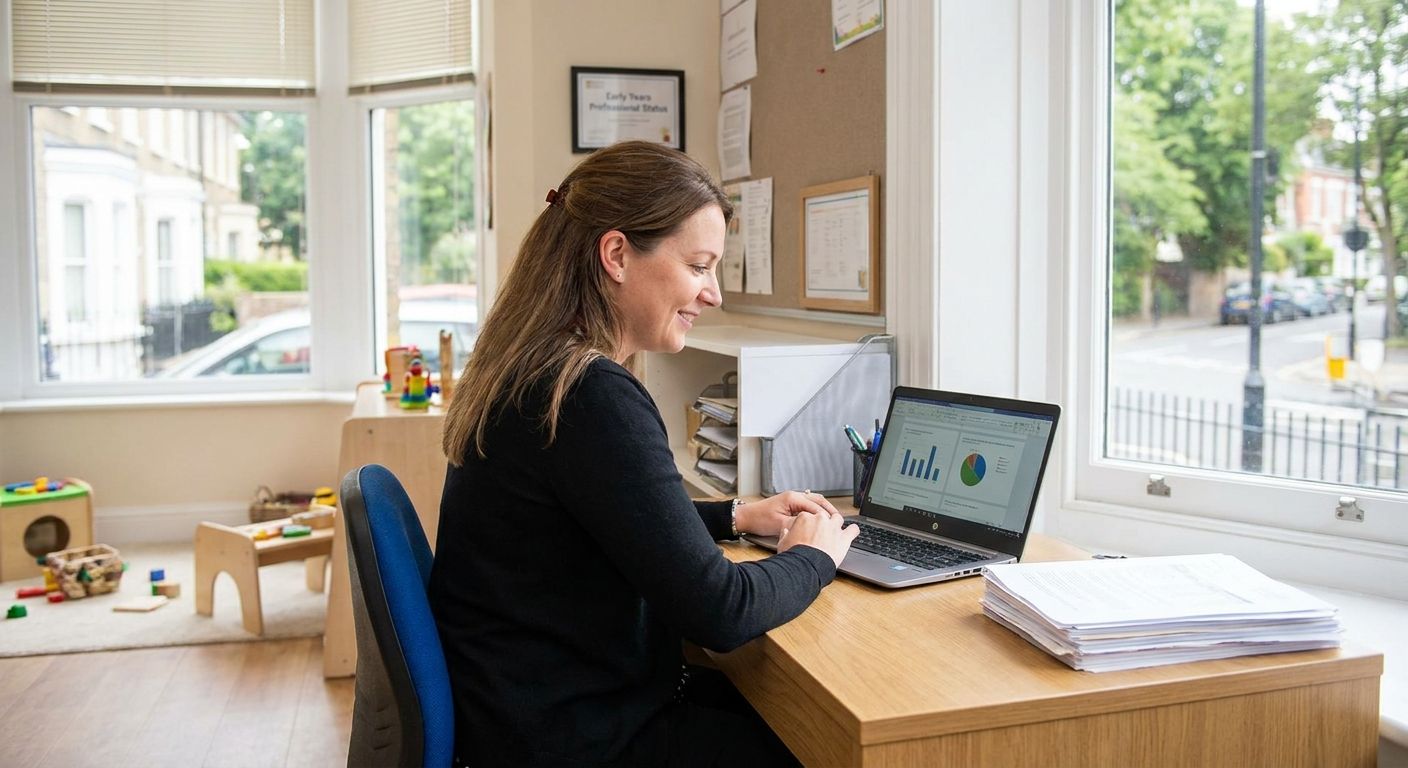
Teacher burnout builds quietly — through marking piles, behaviour management fatigue and vanishing planning time — until it stops you functioning properly in the classroom. This guide sets out the physical, emotional and behavioural signs to watch for, plus a recovery plan built for teachers still carrying a full timetable in 2026.
- Chronic exhaustion, cynicism about students, and falling lesson quality are the three core teacher burnout signs to track in 2026.
- A workload audit plus protected non-negotiable hours reverses early burnout faster than annual leave alone.
- Reflective practice and emotional intelligence work rebuild resilience once exhaustion has been named and addressed.
- Structured CPD prevents relapse when it replaces vague admin tasks rather than adding to them.
- Exhaustion lasting past six weeks of changes needs occupational health involvement, not more willpower.
Why this matters
Teacher burnout signs and recovery aren't abstract HR language — they show up as snapping at a Year 9 class you usually enjoy, or staring at a blank planning document for twenty minutes without writing a word. Left unaddressed, burnout doesn't plateau. It compounds term by term until sick leave, a resignation letter, or a serious health event forces the issue.
The recovery process works the same way reflective practice does in any teaching context: name what's actually happening before you try to fix it. Vague fatigue gets vague fixes. Specific signs get specific interventions, and specific interventions are what actually hold through a full academic year.
What you'll need
- 20 minutes of uninterrupted time for an honest self-audit
- Your last two terms of workload data — marking hours, meeting hours, contact hours if you can pull them
- Your CPD log or record, even if it's informal
- One trusted colleague or line manager willing to have a direct conversation
- A calendar you're prepared to actually edit, not just look at
The recovery steps
1. Run a burnout self-audit
Before any recovery plan works, you need an honest read on where you actually stand. Burnout in teachers typically presents in three clusters: emotional exhaustion (feeling drained before the school day starts), depersonalisation (irritability or cynicism toward students and colleagues you used to like), and reduced sense of accomplishment (feeling like nothing you do makes a difference).
Write down, in one sentence each, the last time you noticed each of the three. If all three have shown up in the past month, treat this as active burnout, not a rough patch. Common mistake: dismissing depersonalisation as "just being tired" — it's the sign most teachers minimise and the one that does the most damage to classroom relationships.
2. Name the specific stressor
Generic fatigue is hard to fix. A workload audit isn't. Track your actual hours for one week — marking, planning, meetings, admin, contact time — and compare it against your contracted hours. Most secondary teachers in England report working well beyond directed time during marking-heavy weeks, and the gap itself is often the single biggest driver of exhaustion.
Once you've isolated the stressor, you can take a specific ask into a conversation with your line manager: fewer books marked in depth per week, a shift in cover allocation, or a change to meeting frequency. Common mistake: asking for "less pressure" generally instead of naming the one task consuming disproportionate hours.
3. Rebuild recovery time into your week
Recovery from burnout doesn't happen in the six-week summer break if the same conditions resume in September. It happens in small, protected blocks during term time — a lunch you actually take away from your desk, one evening a week with zero school work, a hard stop time for marking.
Block these into your calendar as fixed appointments, not aspirations. Expected outcome: within three to four weeks of consistently protecting even 90 minutes a day, most teachers report noticeably lower end-of-day exhaustion. Common mistake: treating protected time as flexible and letting the first busy week override it.
4. Reconnect with why you teach
Burnout erodes the sense of purpose that made teaching worth the workload in the first place. Structured reflection — writing three sentences after a lesson about what worked and why — rebuilds that connection faster than trying to "think positive" in the abstract.
This is where reflective practice models earn their keep: they give exhausted teachers a repeatable, low-effort structure instead of asking for unguided introspection at 6pm on a Tuesday. Expected outcome: a renewed sense of specific competence, even in a difficult week.
5. Address emotional exhaustion directly
Emotional exhaustion in teaching isn't solved by classroom management tricks — it needs emotional regulation skills. Recognising your own stress triggers before they surface as snapping at students is a trainable skill, not a personality trait, and it's one of the reasons emotional intelligence training gets built into teacher CPD in 2026 rather than treated as a soft add-on.
A five-minute check-in before your first lesson — naming your current stress level on a 1-10 scale — interrupts the automatic reaction pattern that depersonalisation runs on. Common mistake: waiting until after a blow-up to address emotional regulation instead of building the check-in into your morning routine.
6. Use CPD strategically, not as another burden
CPD done badly adds to burnout — another course, another certificate, another evening. CPD done well removes friction: a qualification that opens a role with better hours, or training that gives you tools that cut planning time rather than add to it.
Before signing up for anything in 2026, ask whether it solves the specific stressor you named in step 2. If it doesn't, it's not recovery, it's another task. Expected outcome: CPD that reduces workload within a term, not just adds a line to your CV.
7. Escalate formally if signs persist
If exhaustion, cynicism and reduced accomplishment are all still present after six weeks of the changes above, this has moved past self-management. Occupational health referrals exist for exactly this situation, and using one isn't a failure — it's the correct next step when workplace-level changes aren't enough.
Common mistake: waiting for a crisis point (a sick day, a breakdown in class) before asking for formal support, when an earlier referral gives more options.
8. Reassess your career pathway if burnout is structural
Some burnout isn't about workload distribution — it's about role fit. A teacher who's spent a decade in the same classroom position may recover faster by moving toward assessing, quality assurance, or training roles than by adjusting hours in the same job. This is a legitimate recovery strategy, not giving up.
Verdict: if steps 1 through 7 bring temporary relief that evaporates every term, treat that pattern itself as data pointing toward a structural change, not another round of the same fixes.
Troubleshooting
- "I don't have time to do any of this." Start with step 1 only — the 20-minute audit. Everything else depends on knowing what you're actually dealing with, and it costs nothing to run.
- "My school doesn't take wellbeing seriously." Bring data, not feelings, into the conversation — the workload audit from step 2 is harder to dismiss than a general complaint.
- "I feel guilty taking protected time." Guilt is a symptom of reduced accomplishment, not evidence that the time is unearned. Protect it anyway for three weeks and reassess.
- "Burnout comes back every September." That's a sign the underlying stressor was never addressed, only paused by the summer break — go back to step 2.
- "I've lost interest in teaching entirely." That's different from situational exhaustion. Treat step 8 as the priority, not the last resort.
Tools and resources
- A simple burnout tracker: three lines a day noting energy, patience, and sense of purpose on a 1-10 scale
- Your school's CPD log — check what counts as CPD and how to record it before booking anything new
- A reflective journal template for the three-sentence lesson debrief in step 4
- Occupational health contact details from HR, requested before you need them urgently


What to do next
If the recovery steps above bring short-term relief but the same three signs resurface by half-term, that's your signal to look at role change rather than another round of workload negotiation. Emotional regulation work is worth pairing with any of the above — see emotional intelligence in teaching for the specific skills that reduce depersonalisation fastest.
FAQ
What are the earliest signs of teacher burnout?
The earliest signs are emotional exhaustion before the school day starts, irritability toward students you usually like, and a falling sense that your work matters. These three clusters appear in that order for most teachers, often weeks before sick leave becomes necessary.
How long does teacher burnout recovery take?
Noticeable improvement in exhaustion levels typically shows within three to four weeks of consistently protecting recovery time and addressing the specific workload stressor. Full recovery from severe burnout can take a full term or longer, especially if occupational health involvement is needed.
Is teacher burnout the same as stress?
No — stress is short-term and tied to a specific event like an inspection or exam period, while burnout is chronic and includes cynicism and reduced sense of accomplishment alongside exhaustion. Stress usually resolves once the trigger passes; burnout does not without direct intervention.
Can CPD help with teacher burnout or make it worse?
CPD helps only when it directly reduces the specific stressor causing burnout, such as training that cuts planning time or opens a lower-workload role. CPD that adds another task without addressing the underlying cause typically worsens exhaustion.
When should a teacher see occupational health for burnout?
See occupational health if exhaustion, cynicism, and reduced accomplishment are all still present after six weeks of workload and schedule changes. Waiting for a crisis point before referral usually means fewer options for support.
Does changing schools fix teacher burnout?
Changing schools sometimes helps if the burnout is tied to a specific toxic environment, but it rarely fixes structural burnout tied to the role itself. In those cases, a role change — into assessing, quality assurance, or training — tends to hold longer.
What is depersonalisation in teacher burnout?
Depersonalisation is the cynicism or emotional distancing teachers develop toward students and colleagues under chronic stress, often mistaken for simple tiredness. It’s the sign most commonly minimised, yet it does the most damage to classroom relationships if left unaddressed.
Can reflective practice actually reduce burnout?
Yes — structured, low-effort reflection such as a three-sentence lesson debrief rebuilds a sense of specific competence faster than unguided introspection. It works because it replaces vague self-criticism with concrete, repeatable evidence of what went well.
One last thing
The teachers who recover fastest from burnout aren't the ones who take the most time off — they're the ones who name the exact stressor early and change one specific thing about their week before exhaustion becomes cynicism. Waiting for the summer holiday to "reset" almost never works if September reintroduces the same conditions.
Related guides
- What counts as CPD and how to record it
- Best CPD courses for teachers online UK 2026
- What is CPD and why does it matter for educators
Take the next step
Courses related to this guide
- Level 3 Award in Education and Training (AET)The introductory qualification for teaching or training adults, studied online.
- Level 5 Diploma in Teaching (Further Education and Skills)The full teaching qualification for further education and skills, studied online.
Ofqual-regulated qualifications, studied online. Browse all courses or talk to an advisor.