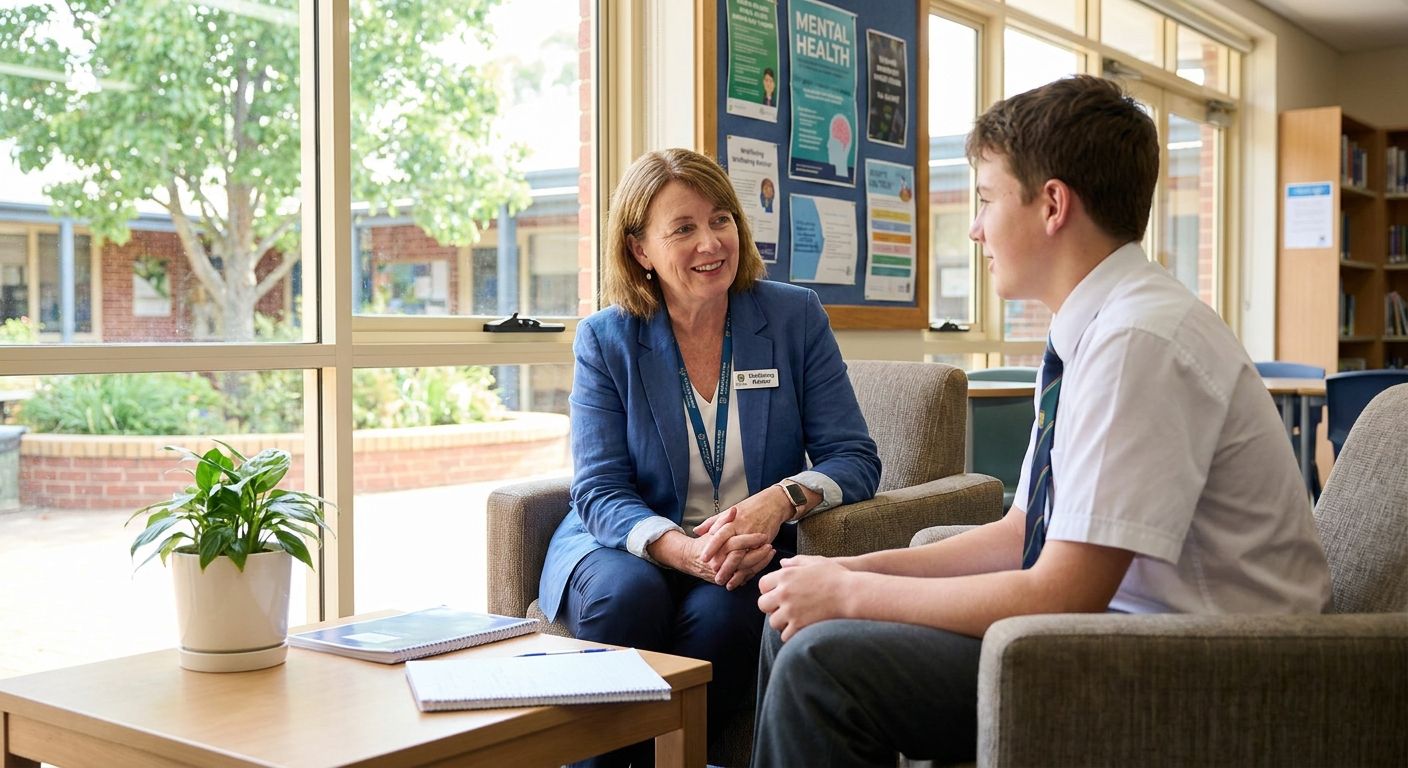
Becoming a school counsellor in the UK runs through a set order: a recognised counselling qualification first, safeguarding clearance second, supervised hours third — skip the order and schools won't shortlist you.
- How to become a school counsellor in 2026 starts with a Level 2 Certificate in Counselling Skills, not a degree.
- A full counselling diploma plus 100+ supervised hours is needed before BACP registration — budget 2-3 years part-time.
- Safeguarding training and an enhanced DBS check are non-negotiable for any school-based counselling role.
- Career changers without a psychology degree can still qualify through vocational counselling routes rather than a full degree.
Why this matters
Schools don't hire counsellors off a CV that lists "good listener" as a skill. They want a stacked qualification path: a foundation certificate, a full diploma, supervised client hours, and registration with a body like the BACP or NCPS.
The entry point most people miss is that you don't need a psychology degree to start. A Level 2 Certificate in Counselling Skills course is the standard first rung, and it's designed for people with no prior counselling background — including teaching assistants and pastoral staff already working in schools.
What trips people up in 2026 is timing. Most full diploma routes take 12-24 months of study plus a further year building supervised hours, so the realistic total from zero to job-ready sits closer to three years than one.
What you'll need
- A Level 2 Certificate in Counselling Skills (or equivalent) as your starting qualification
- 2-3 years available for progression through to a full diploma
- An enhanced DBS check before any school placement
- Safeguarding training specific to working with children and young people
- Access to a supervised placement — school, charity, or private practice
- Budget for course fees and, later, professional body registration fees
The steps
1. Start with a Level 2 Certificate in Counselling Skills
This qualification teaches active listening, boundaries, and basic counselling theory over roughly 8-12 weeks of part-time study. It accomplishes two things: it confirms counselling is the right career fit before you commit to a longer diploma, and it's the entry requirement most Level 3 and Level 4 counselling courses ask for.
Common mistake: treating this certificate as the finish line. Employers rarely hire school counsellors on Level 2 alone — it's a stepping stone, not a job qualification.
2. Progress to a full counselling diploma
Once you've completed Level 2, the next move is a Level 3 or Level 4 diploma that covers counselling theory, ethics, and supervised skills practice in more depth. The route on how to progress from Level 2 to a full counselling diploma matters because some Level 4 diplomas require a minimum number of Level 2 study hours before enrolment — check this before you pay for anything.
Expect this stage to take 12-18 months part-time. Buy into a diploma that includes supervised practice hours built in — courses without them leave you needing to find placements independently afterward.
3. Complete safeguarding training for school settings
Safeguarding sits separately from your counselling qualification but is equally mandatory for anyone working with children in a UK school. It accomplishes compliance with statutory guidance and gives you the working knowledge of disclosure procedures schools expect on day one.
Schools specifically expect training aligned with safeguarding training for teaching assistants and equivalent pastoral staff, even if your role is counselling rather than teaching. Complete this alongside your diploma, not after it — many placement providers require proof of safeguarding before they'll accept you.
Common mistake: assuming a one-off inset day covers this. Schools want a certificated safeguarding course on file, renewed periodically.
4. Log supervised practice hours
Most accredited diploma routes and professional bodies require 100-150 hours of supervised client work before you can register as a practising counsellor. This step accomplishes the practical competence that theory alone can't teach — sitting with a real client under supervision is where most trainees find their gaps.
Track hours from day one in a logbook with dates, session length, and supervisor sign-off. Expected outcome: a portfolio of evidence ready for professional body registration.
Common mistake: leaving hour-logging until the end of the course, then scrambling to get supervisor signatures retrospectively.
5. Register with a professional body
Registration with the BACP, NCPS, or a comparable body gives you a recognised professional standing and, in most cases, is what school HR departments check before confirming a job offer. This accomplishes third-party verification of your training and ongoing CPD commitment.
Applications typically need your diploma certificate, supervised hours log, and a small annual fee. Buy time by applying as soon as your hours are complete — processing can take several weeks.
6. Get your enhanced DBS check
Every school counsellor role in the UK requires an enhanced DBS check with a barred list check for working with children. This accomplishes the legal clearance schools are required to hold on file before you set foot in a classroom or counselling room.
Apply through your prospective employer where possible, since school-sponsored checks are usually faster than individual applications. Common mistake: letting a DBS check lapse between jobs — most schools want one issued within the last 12 months.
7. Apply for school counsellor or pastoral support roles
With your diploma, hours, registration, and DBS in place, you're ready to apply directly for school counsellor vacancies, or adjacent roles like pastoral support or wellbeing mentor while you build experience. This accomplishes the transition from trainee to paid practitioner.
Expected outcome: a first contract, often part-time or termly, with a defined caseload and supervision arrangement already built in.
Troubleshooting
- "I don't have a psychology degree" — you don't need one. The vocational route through Level 2 to Level 4 counselling qualifications is a recognised alternative that most UK schools accept.
- "I'm working full-time and can't find placement hours" — look for evening or weekend placements through charities and helplines first; school placements often open once you're partway through a diploma.
- "My Level 2 certificate isn't being accepted for a Level 4 diploma" — check the specific provider's entry requirements before enrolling; some ask for a minimum guided learning hours figure, not just the certificate title.
- "I can't afford the full diploma route in one go" — study in stages: Level 2 first, pause, save, then Level 3/4. It costs more in total time but spreads the fees.
- "Schools want BACP registration but I'm not accredited yet" — many schools will accept "student" or "trainee" membership status while you accumulate hours, so register early rather than waiting for full accreditation.
Tools and resources
- A Level 2 Certificate in Counselling Skills as your foundation qualification
- A structured diploma pathway with built-in supervised hours
- A safeguarding certificate renewed on a schedule your placement provider sets
- A supervised hours logbook, dated and signed
- Registration paperwork for BACP or NCPS, prepared in advance of course completion
What to do next
Once your counselling qualifications are in progress, look at adjacent pastoral routes in case a straight counselling vacancy isn't available yet — the guide on how to become a SENCo covers a related pathway many trainee counsellors use to gain school-based experience while finishing their hours.
FAQ
What qualifications do you need to become a school counsellor in the UK?
You need a Level 2 Certificate in Counselling Skills followed by a Level 3 or Level 4 counselling diploma, plus safeguarding training and an enhanced DBS check. Professional body registration with the BACP or NCPS usually comes after supervised hours are complete.
Do you need a degree to become a school counsellor?
No, a degree is not required. The vocational route through Level 2 to Level 4 counselling qualifications is a recognised alternative that most UK schools accept for pastoral and counselling roles.
How long does it take to become a school counsellor?
Most people take 2-3 years part-time, covering the Level 2 certificate, a full diploma, and 100-150 supervised practice hours. Full-time study can shorten this, but placement availability often sets the real pace.
Is Level 2 Counselling Skills enough to work in a school?
No, Level 2 is a foundation certificate, not a job-ready qualification. Schools expect a full diploma plus supervised hours before hiring for a counselling role.
Do school counsellors need a DBS check?
Yes, an enhanced DBS check with a barred list check is mandatory for anyone working with children in a UK school setting, including counsellors.
Can a teaching assistant become a school counsellor?
Yes, many teaching assistants move into counselling roles by completing a Level 2 Certificate in Counselling Skills alongside their existing safeguarding training, then progressing to a full diploma.
What’s the difference between a school counsellor and a learning mentor?
A school counsellor holds a formal counselling qualification and works with emotional and mental health needs directly, while a learning mentor focuses on academic and behavioural support without the clinical counselling training.
Do you need BACP accreditation before applying for jobs?
No, many schools accept trainee or student membership status while you complete supervised hours. Full accreditation typically follows once hours and diploma requirements are met.
One last thing
The biggest gap trainees underestimate isn't the qualification — it's the supervised hours. A diploma certificate on its own rarely gets you hired in 2026; it's the logged, signed-off client hours that schools and professional bodies actually check before confirming a role.
Related guides